
Cataract Surgery & What to Expect

How cataract surgery can transform your daily routine.

Older couple at the beach

Why Cataract Surgery Makes Sense

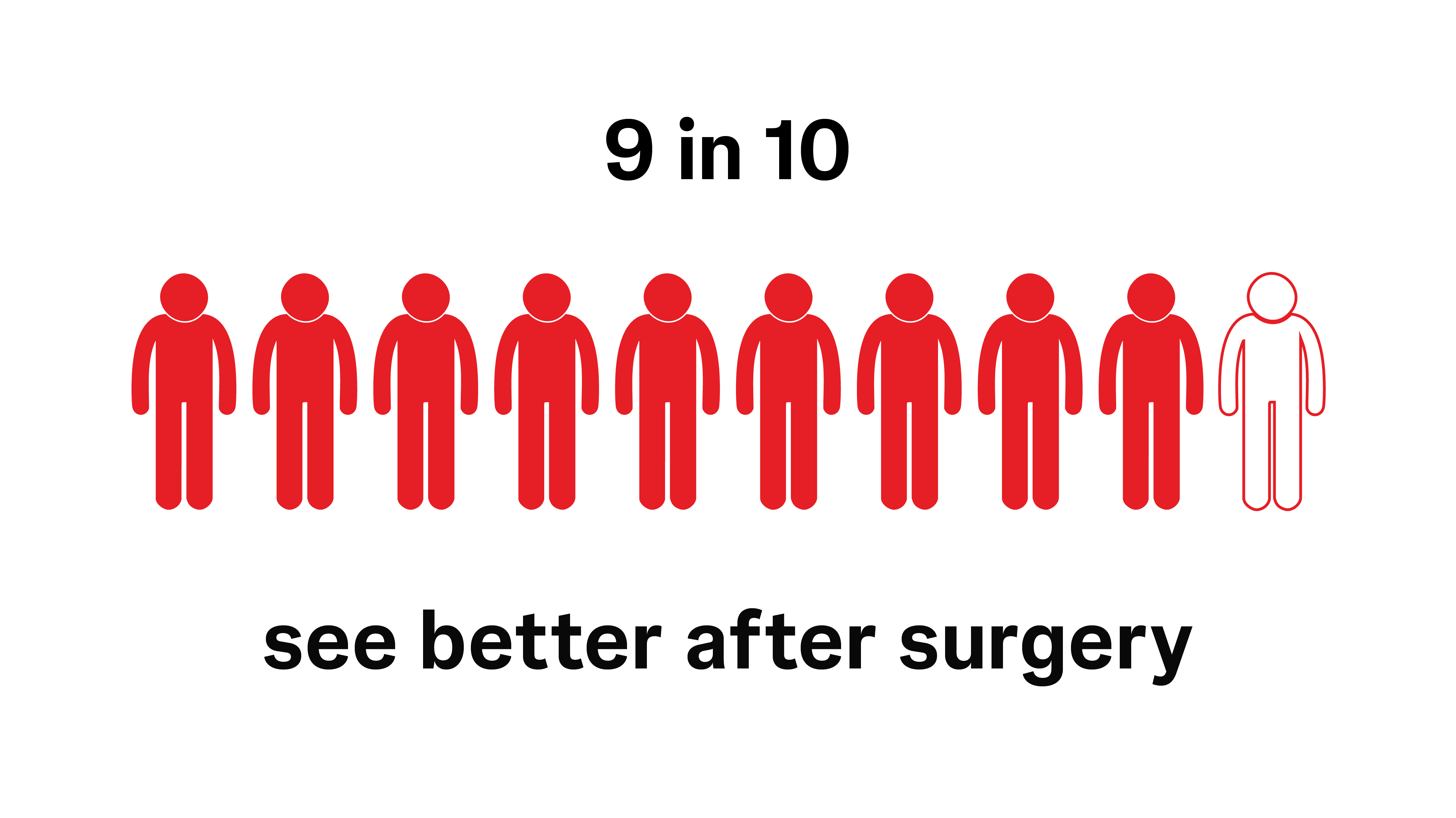
9 in 10

Cataract surgery is the only effective treatment for cataracts. It’s one of the most common and successful surgeries performed today, with 9 out of 10 people seeing better after surgery, according to the National Institutes of Health.1

What to Expect During Cataract Surgery

Cataract surgery is one of the most common procedures performed today1, and your care team will be with you every step of the way to help you feel comfortable and at ease. The procedure usually takes less time than watching your favorite TV show, about 15 to 20 minutes. Here’s what you can generally expect during the procedure:

1. Before surgery begins

Your eye will be gently numbed with special eye drops so you stay comfortable throughout the procedure. You may also receive medication to help you relax.

4. A minimally invasive approach

The procedure is designed to be minimally invasive. The tiny opening used during surgery is very small and typically heals naturally on its own.

2. During surgery

You will be awake, but most people feel very calm and experience little to no discomfort. You may notice lights or gentle movement, but you will not see the procedure itself.

5. After Surgery

You’ll spend a short time resting while your care team makes sure you’re feeling well before heading home the same day.

3. Removing and replacing the lens

Your surgeon uses advanced technology and precise instruments to carefully remove the cloudy lens causing your cataract. A clear artificial lens, called an intraocular lens (IOL), is then placed in your eye to help restore your vision.

Recovery Timeline: What to Expect

1. Expect Some Blurriness at First

It’s normal for your vision to be blurry right after surgery. As your eye heals, many people start to notice clearer vision within a few days.

2. Follow Your Care Plan

Your doctor will provide eye drops and simple instructions to help prevent infection and support healing—be sure to follow them closely.

3. Ease Back into Daily Activities

Most patients can return to normal routines within 24–48 hours, but always follow your doctor’s guidance on timing.

4. Give Your Eye Time to Heal

Some swelling and temporary distorted vision can happen for a few days after surgery—this is part of the normal healing process.

5. Be Patient as Your Eyes Adjust

Your brain needs time to adapt to your new lens (called neuroadaptation). Vision often improves gradually, so give yourself time to adjust.

6. Look Forward to Results

By around six months, most patients report being satisfied with their cataract surgery outcome.

Things to remember:

Bell

Like any other surgery, there is a healing time for cataract surgery. Typically, your eye can be swollen for a few days after surgery, causing distorted vision. 

Concept of neuroadaptation — With your new IOL, it will take some time for your brain to adjust to your new way of seeing; be patient with the process!

Frequently Asked Question

If I have a cataract, am I a candidate for any IOL?

Depending on your eye anatomy and medical history, you may not be a candidate for certain IOLs. Talk to your eye care professional about what IOLs you are a candidate for and which best would suit your lifestyle.

Is cataract surgery the same as refractive surgery (or LASIK)?

Refractive surgery uses a laser to reshape the cornea to help focus light on your retina minimizing your need for glasses and contact lenses. Cataract surgery is removing the cloudy lens and replacing with an artificial IOL implant. It is important to remember that typically refractive surgery is very customized, but cataract surgery may have more limitations. The procedures are not the same.

Will I need reading glasses again?

While there are types of IOLs designed to minimize your need for glasses, it is not realistic to think you will never need reading glasses after cataract surgery.

Will my vision be immediately improved one day after surgery?

In any surgery there is healing time. The same goes for cataract surgery, give your eyes time to heal and your brain to adjust to a new way of seeing.

If, after surgery, I see rings when looking at lights, is something wrong?

Some types of IOLs manipulate light to give you more than just distance vision. Seeing rings at night is a common result of this light manipulation and does not mean something is wrong. It is important to understand these trade-offs prior to cataract surgery, so talk to your eye care professional about what option is right for you.

If I have near vision before surgery, will I have near vision after surgery?

There are a few reasons why you may have good near vision, even with a cataract. Your natural lens may still retain some ability to adjust focus(accommodate) or you may be naturally able to see up close, while your IOL implant will allow you to see at specified distances. The IOL you receive determines where and how you see. It is important to remember, just because you have near vision prior to cataract surgery, does not mean you will have it after.

Resources to help navigate your cataract treatment journey

Lady using an ipad

Understanding Cataracts

Cataract Patient Magazine

Cataract Patient Brochure

middle age couple

Understanding Astigmatism

Find a Doctor

Use our easy search tool to find an eye doctor in your local area who can diagnose and treat you.

Doctor

References:

1. 2025REF5002.

2026PP10927